SYS-BRK // 01
Breaker restoration and routing
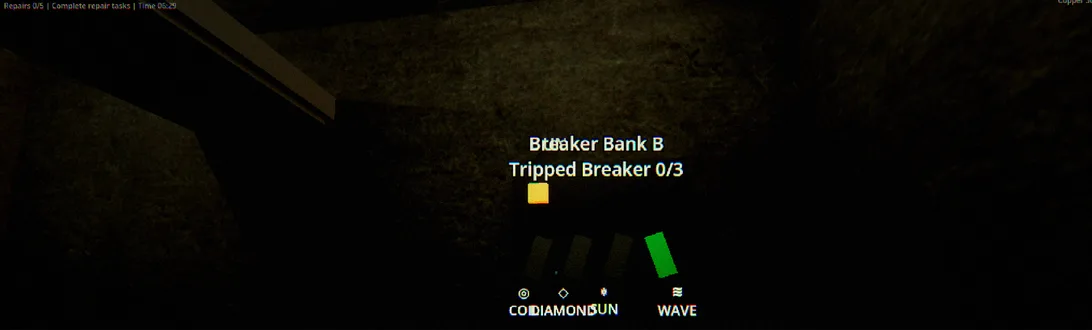
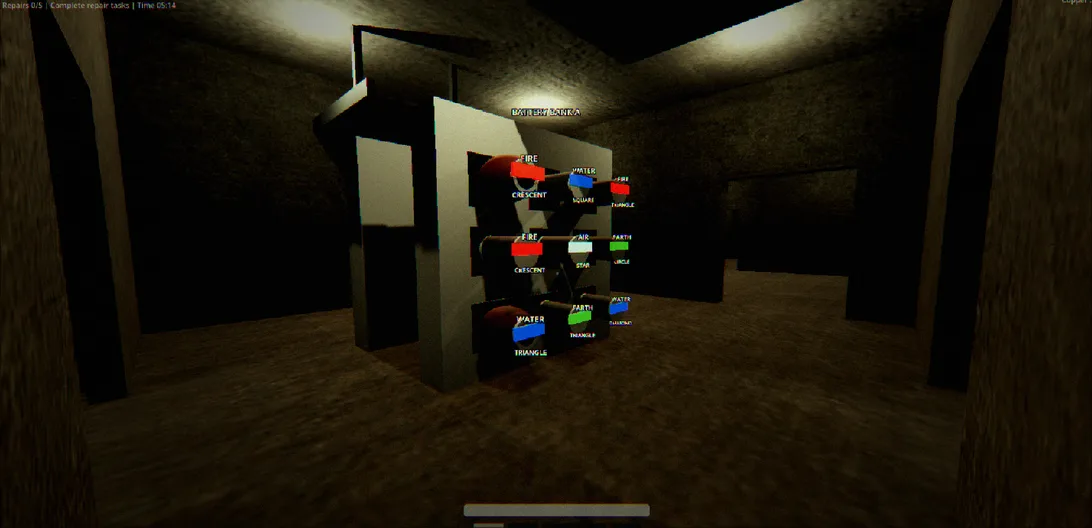
Flip physical switches, identify the bank by its markings, and route the correct connection through linked switchgear.
2–4 player co-op extraction horror // PC
OVERTIME is a co-op horror game about splitting up inside a hostile industrial megastructure, talking your crew through physical repairs, and getting everyone back out.
In development // Working title // No release date announced
01 / SHIFT BRIEFING
The work changes from facility to facility. The order does not: find the fault, find the procedure, restore the system, and leave together.
Enter a generated industrial facility with your crew.
Find the broken system and locate its matching maintenance procedure.
Relay symbols, serials, routes, and readings while another player manipulates the physical machine.
Complete the repairs, recover what the crew can carry, and reach extraction.
02 / OPEN CHANNEL
Operator // at the fault
Report the unit, the visible state, and every symbol you can read. The machine does not carry its own answer.
Manual // somewhere else
Procedure index // electrical
A second player finds the right terminal, identifies the matching machine record, and translates the procedure over voice.
Illustrative radio exchange // not a player quote
Operator // Breaker Bank B. Three switches down.
Manual // Read the symbols left to right.
Operator // Coil. Diamond. Sun. Wave.
03 / EQUIPMENT RECORD
Switches move. Connections reroute. Instruments answer back. Components leave the cabinet in your hands, and mistakes can be corrected before they become fatal.
SYS-BRK // 01
Flip physical switches, identify the bank by its markings, and route the correct connection through linked switchgear.
SYS-TSF // 02
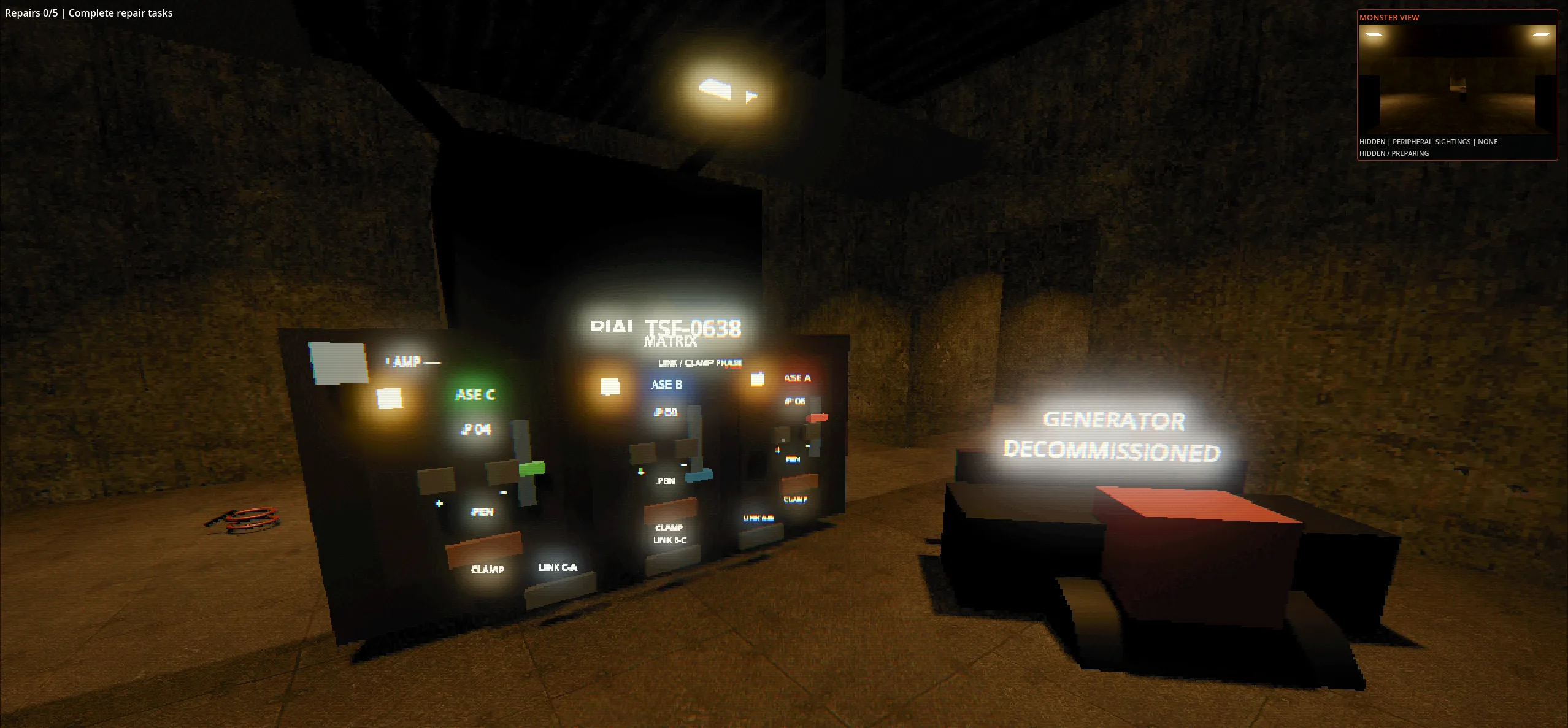
Read the active phase controls, adjust the heavy hardware, and confirm the instrument response without exposing the full route.
SYS-BAT // 03
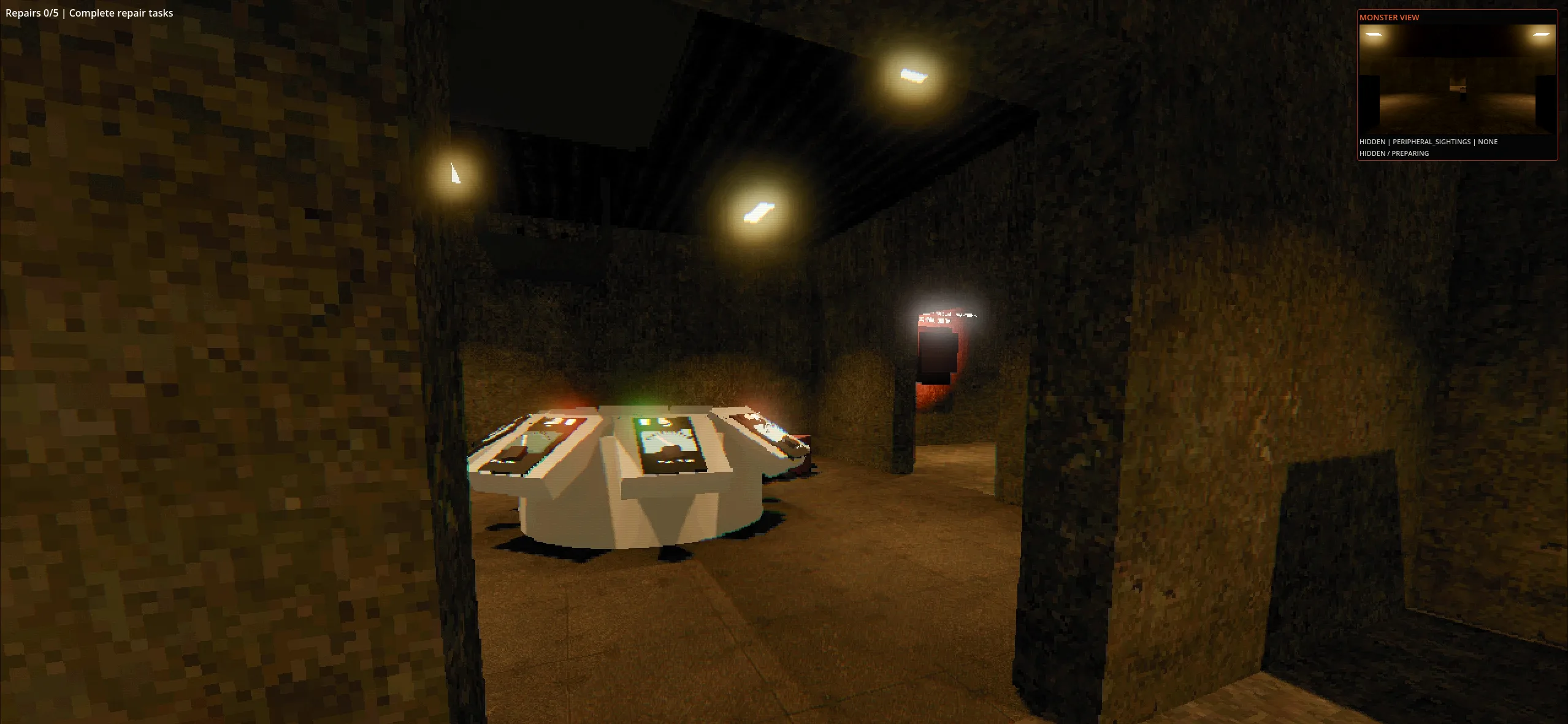
Carry cartridges out of the bank, quarantine damaged cells, and install replacements in the correct orientation.
SYS-CTL // 04
Watch the instruments, turn the controls, and hold the machine at the values relayed from the maintenance record.
04 / FACILITY ENVELOPE
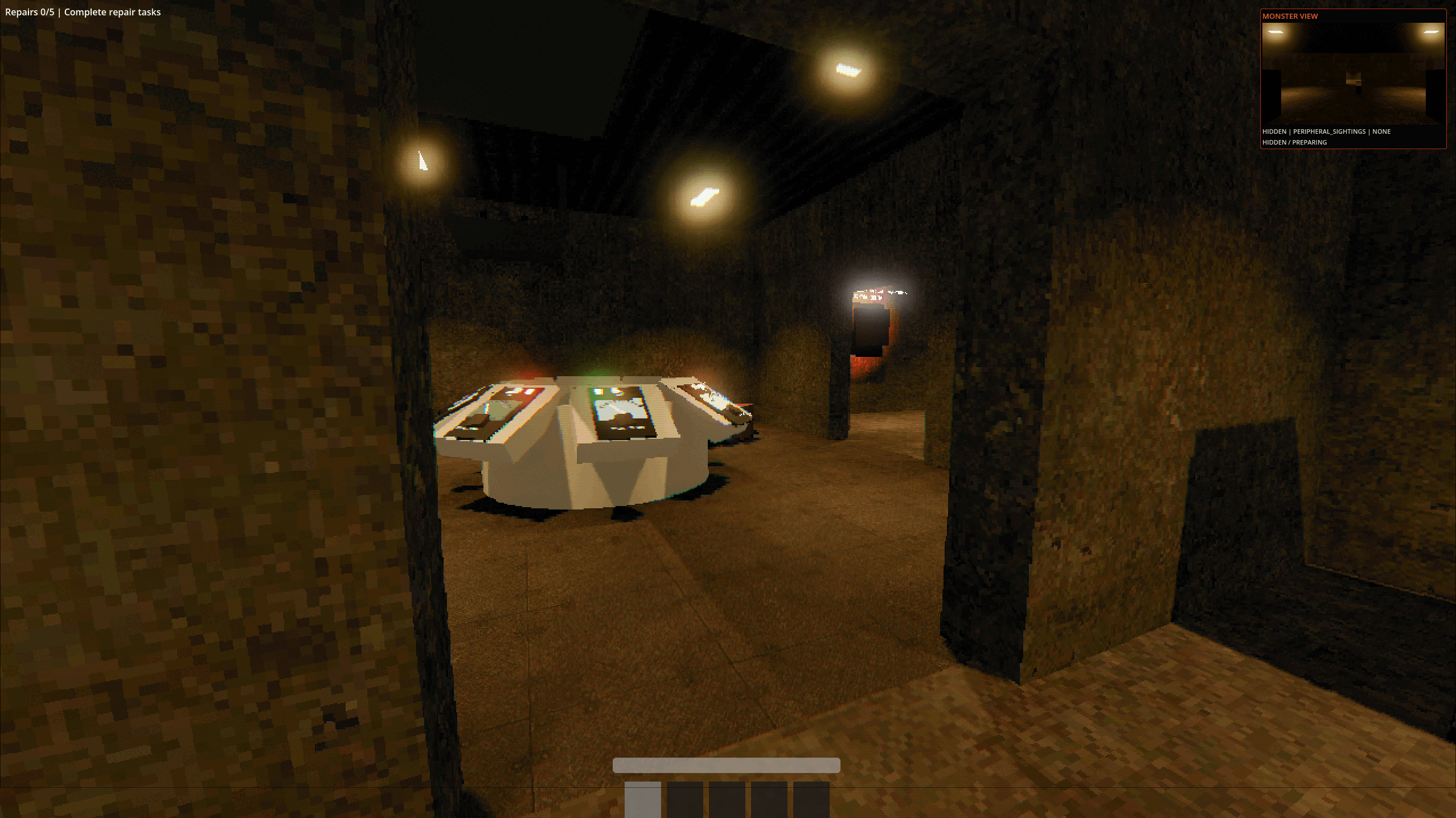
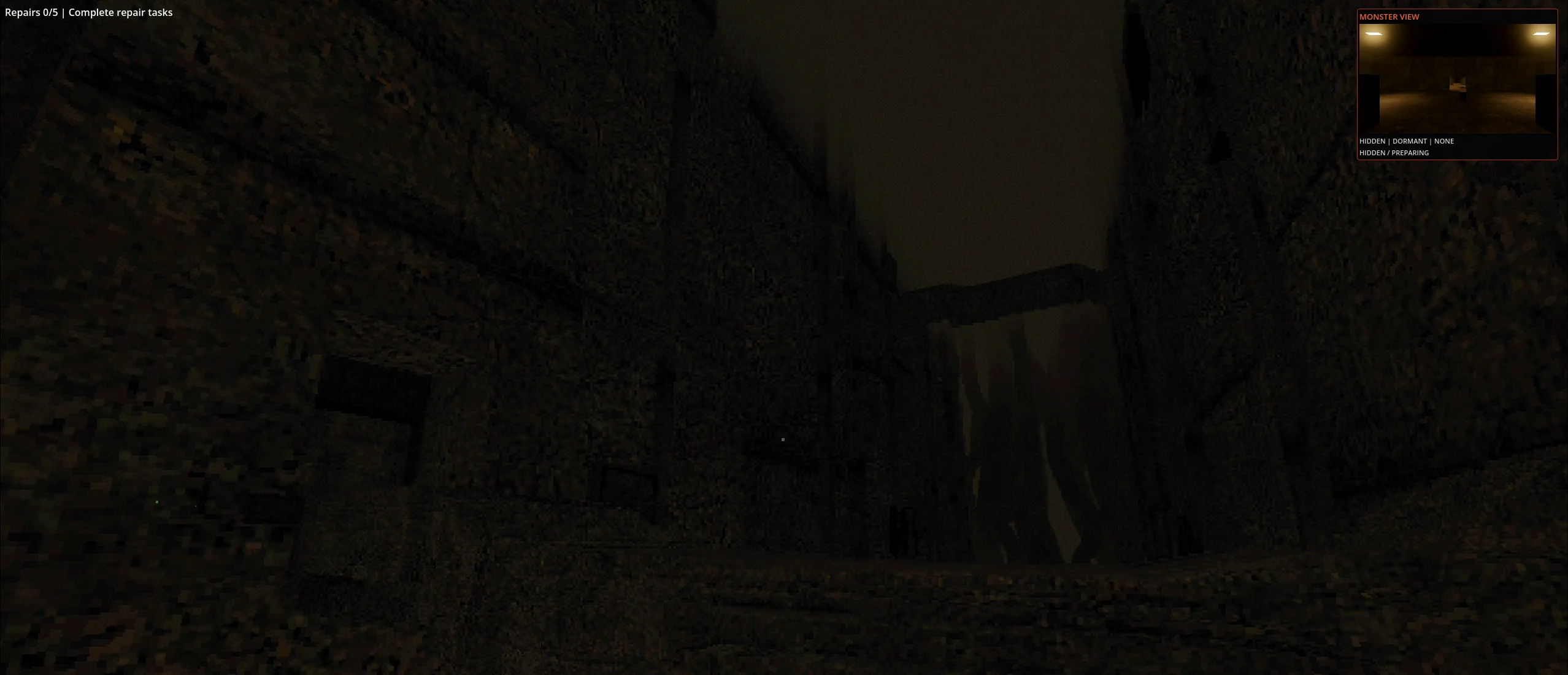
Repairs are distributed through a generated industrial structure. Terminals and machines may be separated by stairwells, platforms, and long stretches of unlit concrete. Navigation becomes part of the call.
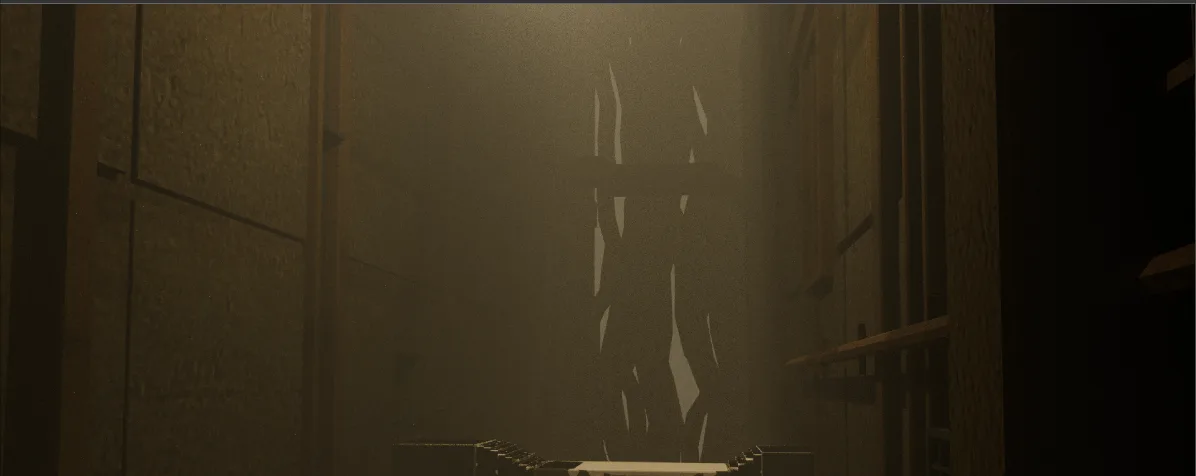
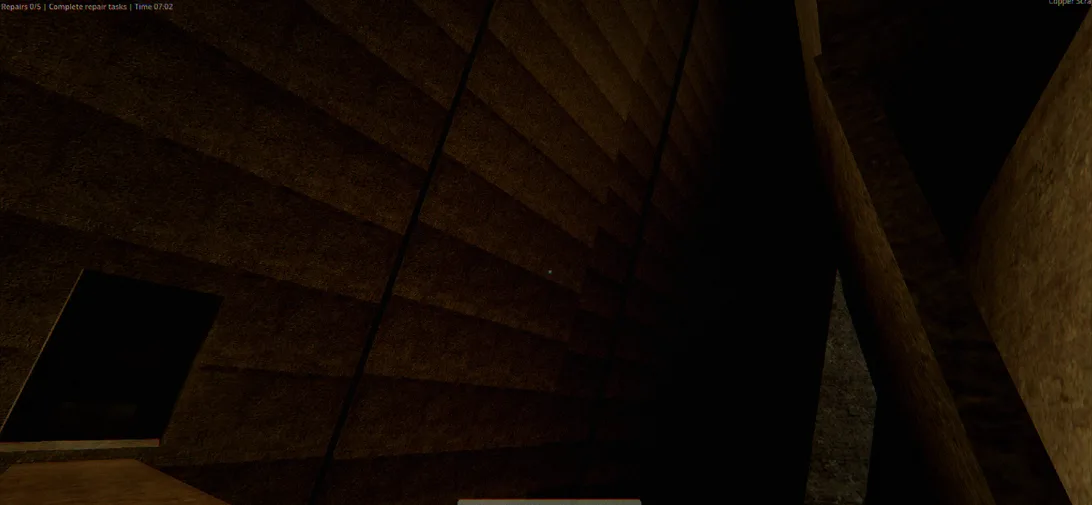
Darkness is working space, concealment, and missing information. A crew has to describe routes as carefully as it describes machinery.
05 / EXTRACTION LOAD
Five repairs are the mission requirement. What happens around them is a crew decision.
The crew decides how much of the structure to keep alive, how much weight to carry, and when the return trip has become too dangerous.
06 / DEVELOPMENT PROGRESS
The separate repair prototypes now connect to a generated, networked shift with consequences, extraction, and a way forward. These are the major systems already in place.
Read the full July reportMission loop
All five repair families report through one mission lifecycle. Completion can unlock the transfer and extraction sequence, while success, total loss, and the next-floor reset now resolve cleanly for the crew.
Generation
Each sector now builds its own connected mini-map with long routes, loops, short branches, recognizable boundaries, and topology-matched hallways. Current validation floors land at roughly 75–80 rooms without falling back to placeholder layouts.
Environment
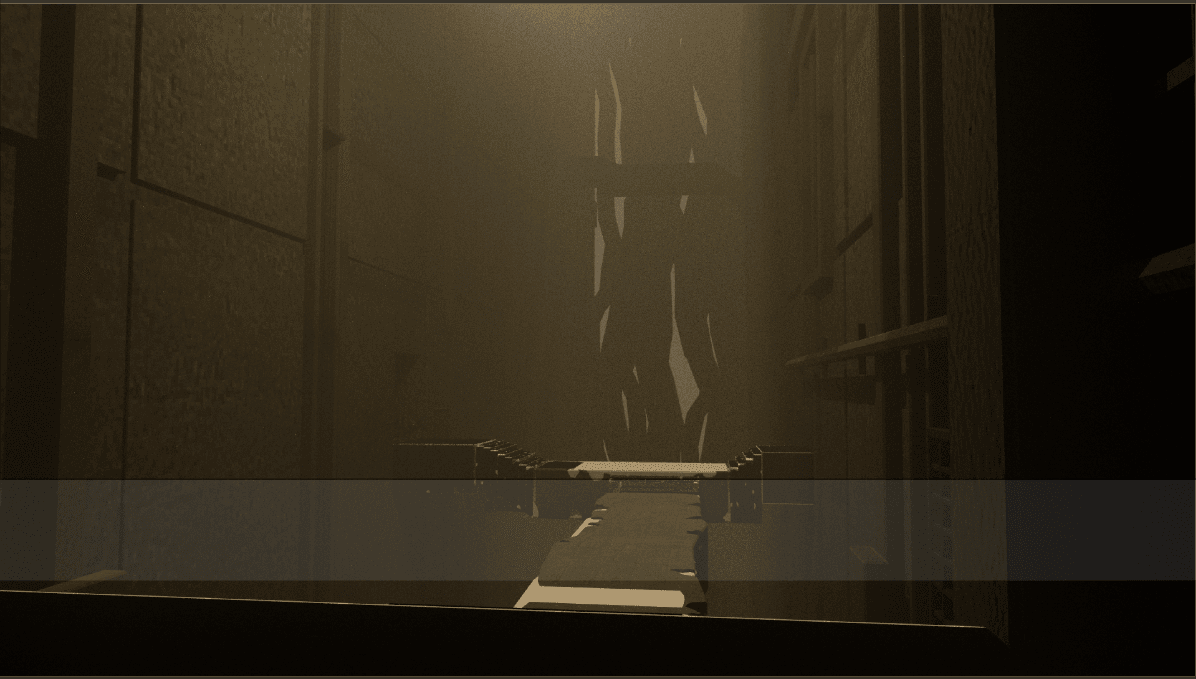
Multi-story generation, a four-way floor breach, a hanging-cable chamber, and giant boundary structures give crews places they can name over the radio instead of navigating an undifferentiated maze.
Co-op physics
Server-owned item drops, charged throws, impact reactions, forced equipment drops, and downed-player dragging now work across the network. A five-row facility work order keeps the crew’s shared repair state readable.
Presentation
Eye adaptation, restrained fog, noisy low-saturation darkness, and an exact two-times nearest-neighbour upscale now produce the coarse industrial image without blurring the machinery players need to read.
Threat
The host-controlled security machine roams the doorway graph, pursues across baked navigation, stops when any living player has a clear view, and uses power-down periods to recharge before moving again.
Power & salvage
Sector power, sparse copper recovery, physical cargo, survivor-held equipment, ship fabrication, and a timed extraction sequence connect optional risk on the floor to what the crew brings into the next shift.
A July development report on the connected mission loop, five repair families, three-sector generation, physical co-op systems, and the work still ahead.
Read reportAn introduction to OVERTIME’s physical repair work, split maintenance procedures, and extraction loop.
Read report07 / OPEN CHANNEL
Field reports cover new repair systems, environmental work, and what changes after playtesting.